How Smart are Crows
The Genius of Crows: More Than Just a Birdbrain
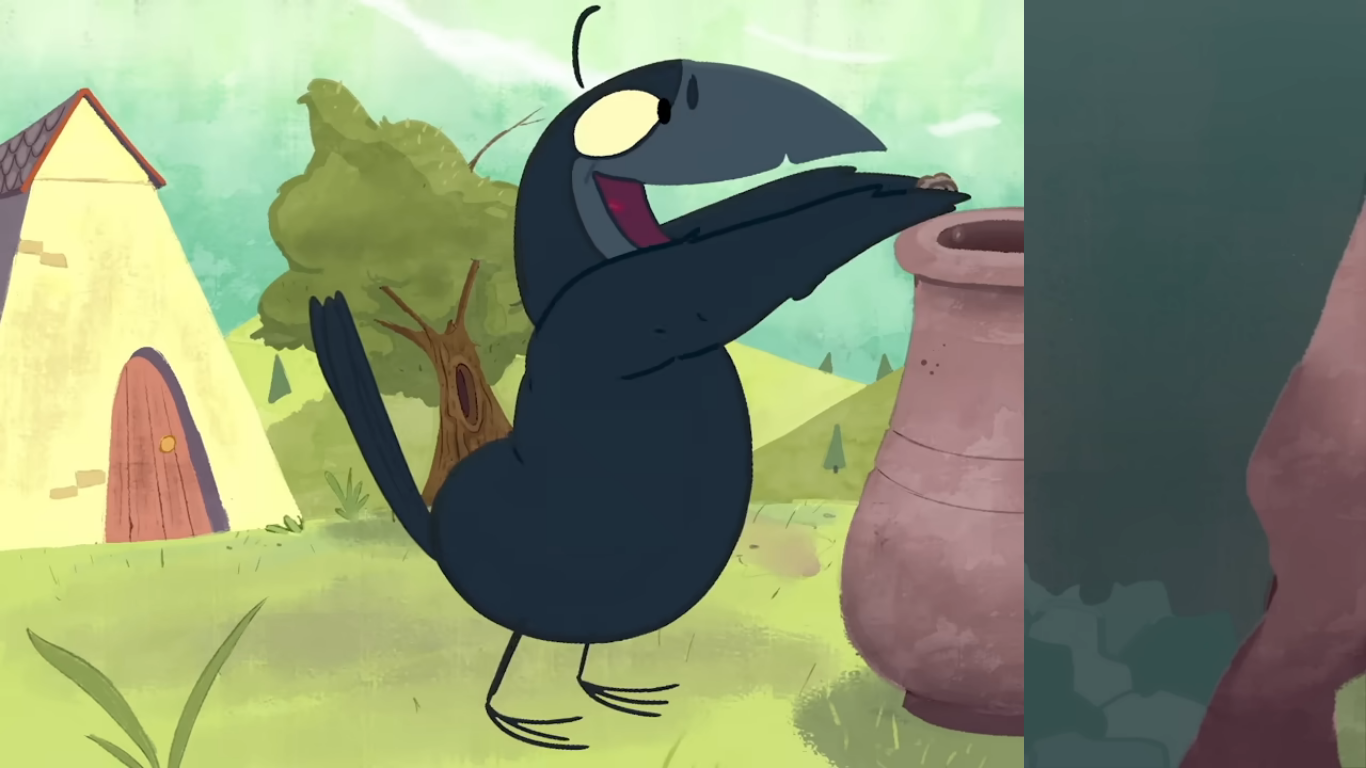
The ancient fable of the crow and the pitcher, where a thirsty bird raises the water level by dropping in pebbles, is often seen as a simple lesson in persistence. But as modern science has discovered, it’s also a startlingly accurate depiction of corvid intelligence.
This family of songbirds—which includes crows, ravens, jays, and magpies—exhibits a level of brainpower that rivals that of primates, forcing us to rethink what it means to be a “birdbrain.”
Strategic Survivalists
Corvids are master strategists, especially when it comes to food. They are famous for their ability to cache, or hide, thousands of food items and recover them months later. A single Clark’s nutcracker, for instance, can scatter up to 30,000 pine seeds across thousands of sites and remember their locations for over nine months.
Their memory is not just about location, but also content and time. In experiments, scrub jays given both perishable waxworms and stable peanuts cached the worms first and retrieved them before they spoiled, leaving the peanuts for later. This demonstrates an advanced concept called episodic-like memory, recalling the what, where, and when of past events. Even more impressively, they will hide food when they know it will be scarce the next day, indicating an ability to plan for the future.
Social and Emotional Intelligence
Their cleverness extends far beyond meal prepping. Corvids possess a sophisticated social intelligence. In one notable experiment, a wild crow that had been trapped and released by a person wearing a mask later dive-bombed that same masked individual while ignoring others wearing different masks. This shows an incredible ability to distinguish between and remember human facial features—and hold a grudge.
They also exhibit complex behaviors around death, often gathering around deceased companions in gatherings that resemble funerals. Studies show that crows are slower to return to an area where they’ve seen a dead crow, suggesting they associate it with danger and can assess risk.
Master Toolmakers and Problem Solvers
New Caledonian crows are renowned for their tool use, even fashioning sticks into hooks in the wild to probe for insects. Their reasoning skills are equally sharp; some Japanese crows have been observed placing tough nuts on roads, waiting for cars to crack them open, and then safely retrieving the prize.
The Playful Learner
Not all corvid behavior has an obvious survival purpose. They have been seen carrying around trinkets, perhaps to practice caching or as gifts for mates, and even sledding down snowy roofs on plastic lids for fun. This play, especially common in juveniles, is believed to be crucial for learning and building the neural foundation for their intelligent behavior. Their highly social lives—cooperatively breeding, communicating in large groups, and forming lifelong partnerships where they predict each other’s desires—further drive their need for cleverness.
Rethinking the Avian Brain
For a long time, the corvid brain was dismissed as primitive compared to that of mammals. This was a fundamental misinterpretation. While a raven’s brain is structurally different and smaller than a monkey’s, it packs a similar number of neurons into its pallium—the region associated with advanced cognition. Essentially, corvid and primate brains evolved on very different paths but arrived at a similar destination: sophisticated intelligence.
So, the next time you see a crow, you can be assured you’re in the presence of a feathered genius. Just be mindful, as they are certainly smart enough to remember who their friends are—and who their enemies are, too.