Science behind Lightning
1. How are charges created in the cloud
Charges in a cloud are produced primarily through frictional interactions between water droplets, ice crystals, and hail within the cloud a process known as collisional charging
-
Thunderclouds (cumulonimbus clouds) have strong vertical air currents (updrafts and downdrafts). These currents cause particles of varying sizes like water droplets, ice crystals, and graupel (soft hail) to collide repeatedly. When these collide the particles tend to gain charge This happens due to the triboelectric effect — similar to rubbing a balloon on your hair.
-
Lighter positively charged ice crystals are carried upward by the strong updrafts. Heavier negatively charged graupel falls lower in the cloud. This causes a vertical charge separation within the cloud:
- Positive charges build up near the top.
- Negative charges build up near the bottom.
2 Grounding and Raindrops
Ok lest talk about our main element “The Ground” The ground is electrically neutral and acts as a ground as it absorbs excess charge and neutralizes static electricity. you might have heard about about Earthings that are often installed as a safety net in buildings and houses to protect them for lightnings etc. When we talk about the lightning strikes specially raindrops, they might carry charge, but once they hit the ground, they are neutralized — not stored. but it would be wrong to assume that the chagres on the raindrops have an role in lightning strikes .Any charges on the ground due to raindrops are insignificant and not involved in lightning.
3. Induced Charges and Image Charges
When a charged object (e.g., a statically charged balloon ) is held near the ground, it induces an opposite charge on the ground. This is not actual charge accumulation, but a mirror image effect., These induced charges can contribute to a discharge,They are not freely moving electrons that seek to return to the clouds.
- The negative charge at the cloud base induces a positive charge on the ground below it — like a mirror image.
4. Lightning
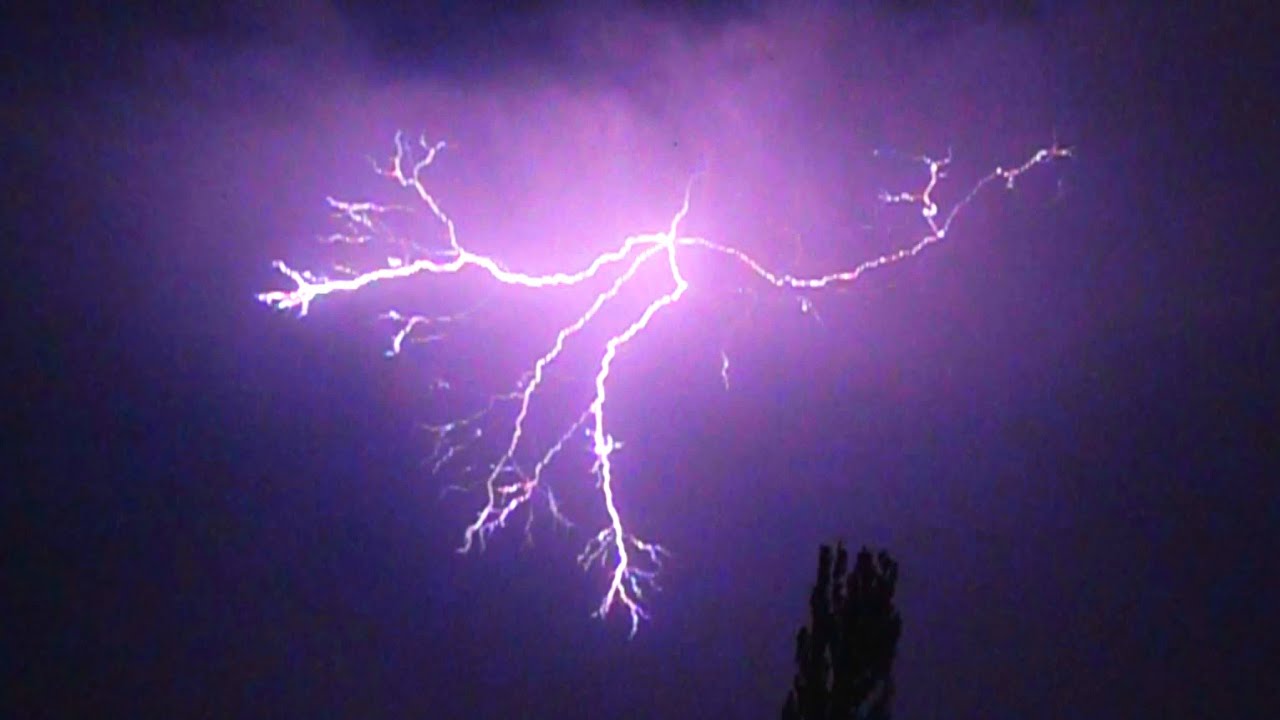
Most lightning originates in the clouds, due to charge separation from turbulent collisions between ice and water particles. This generates positive charges at the top and negative charges at the bottom of the cloud. As negative charges descend, they induce positive charges on the ground, leading to a discharge Lightning Strikes Are Mostly Cloud-to-Cloud The majority of lightning happens within or between clouds, not from cloud to ground. Cloud-to-ground lightning is a smaller percentage and often incidental, depending on how electric fields evolve.
- Downward Negative Flash: Most common. Negative leaders descend from the cloud, inducing positive upward leaders from the ground.
- Upward Positive Flash: Initiated by the ground (usually tall structures) without a descending leader.
- Flashes can be positive or negative, upward or downward — totaling four variations.
Taller objects attract lightning, but small height differences (like between athletes) usually don’t matter. Lightning prefers conductive paths humans are mostly water and salts, making us excellent conductors.
Step Potential Danger Even if not directly hit, a person near a strike can be injured by step potential: voltage differences between feet. For example: If 50,000 amps strike the ground and the resistance is 100 ohms, it could generate 5 million volts. Voltage decays with distance, but standing or lying with limbs spread apart increases risk. Lying flat maximizes body exposure to voltage gradients.
SOURCE : Neil deGrasse Tyson and lightning expert Amir Rizk